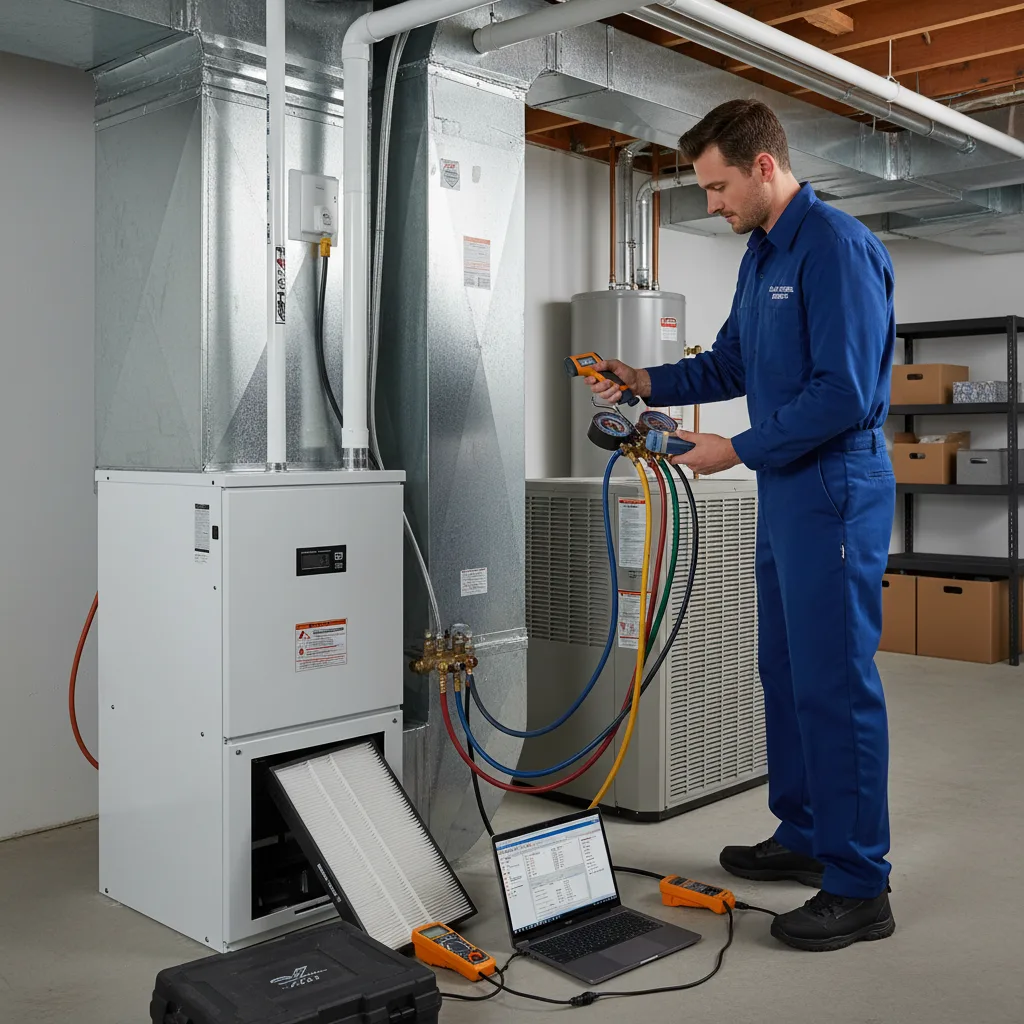
Your HVAC filter is the single most important factor in keeping air ducts clean. A MERV 11-13 filter changed every 60-90 days prevents most dust, pollen, and pet dander from entering the ductwork. Cheap fiberglass filters (MERV 1-4) let fine particles pass through, leading to faster duct contamination and more frequent need for professional cleaning.
Get the filter right, and you may be able to stretch the time between professional cleanings significantly. Get it wrong, and you are paying for duct cleaning much more often than you should need to.
How HVAC Filters Work
Your HVAC system pulls return air from your home through a filter before the air reaches the blower, coils, and ductwork. The filter is designed to capture particles: dust, pollen, pet dander, mold spores, and other airborne debris. Anything the filter does not catch passes through and eventually deposits on the interior surfaces of your ducts.
The filter is positioned at the return air intake, usually in a hallway, ceiling, or mechanical room. Every cubic foot of air in your home cycles through this filter multiple times per day when the HVAC is running. Over months and years, what gets past that filter builds up inside the ducts.
MERV Ratings Explained
MERV stands for Minimum Efficiency Reporting Value. It is a standardized rating that tells you how effectively a filter captures particles of various sizes. Higher MERV means better filtration, but also more airflow restriction.
| MERV Rating | What It Captures | Best For | Change Frequency |
|---|---|---|---|
| MERV 1 to 4 | Large debris, lint, pollen | Basic protection only | Monthly |
| MERV 8 | Dust, mold spores, pet dander | Average homes | Every 60 to 90 days |
| MERV 11 | Fine dust, smoke particles, allergens | Homes with pets or mild allergies | Every 60 to 90 days |
| MERV 13 | Bacteria, fine smoke, virus carriers | Allergy/asthma households | Every 60 to 90 days |
| MERV 16+ | Near-HEPA level filtration | Medical/commercial use | Per manufacturer |
Check your system first: Not all HVAC systems can handle high-MERV filters. Older systems with smaller blower motors may strain against the increased airflow resistance of a MERV 13 filter. Check your HVAC manual or ask a technician before upgrading. A system running against a filter that is too restrictive can damage the blower motor over time.
How Filter Neglect Accelerates Duct Contamination
When a filter is left in too long, it becomes saturated with captured particles. At that point, two bad things happen simultaneously.
First, the clogged filter restricts airflow significantly. Your HVAC system has to work harder to pull air through, which strains the blower motor and drives up energy costs. You will notice rooms taking longer to reach temperature, and your electric bill may rise.
Second, and worse for your ducts: once the filter is saturated, air starts bypassing it. It finds the path of least resistance, often around the edges of the filter where it does not seat perfectly in its frame. This unfiltered air flows directly into the duct system carrying all the particles the filter was supposed to catch.
A filter bypassed is worse than no filter at all: When air bypasses a clogged filter, it often carries concentrated debris that built up at the filter's edges. This can deposit a noticeable amount of debris into the duct system in a short period, especially on the evaporator coil. A dirty evaporator coil is expensive to clean and can cause system failures.
How Often to Change Your Filter by Home Type
| Home Situation | Recommended Change Frequency |
|---|---|
| Single adult, no pets | Every 90 days |
| Average family, no pets | Every 60 to 90 days |
| One pet (shedding) | Every 60 days |
| Multiple pets | Every 30 to 45 days |
| Allergy or asthma sufferers | Every 30 to 60 days |
| Post-renovation or move-in | Immediately, then every 30 days for 3 months |
| Vacation home (low use) | Every 6 months at minimum |
Using Filter Color as a Diagnostic Tool
Pull your filter out and look at it before you put in a fresh one. What you see tells you a lot about your indoor air quality and how hard your system has been working.
- Light grey coating: Normal. The filter is doing its job. You are probably on a reasonable change schedule.
- Dark grey or black: Overdue for a change. The filter is approaching saturation. Increase your change frequency.
- Brown or orange tint: Pet dander and skin cells. Increase frequency or upgrade to MERV 11.
- White or very light after 60+ days: Either your home has unusually clean air, or air is bypassing the filter without going through it. Check that the filter frame seals properly.
- Dark and wet: Moisture issue. Could indicate a refrigerant leak causing excess condensation, or high humidity. Have an HVAC tech check the system.
When Good Filtration Replaces the Need for Cleaning
The EPA guidance on duct cleaning is honest: cleaning is not always necessary. If a home has been maintained with good filtration, no moisture events, no pets, and no renovations, the ductwork may be genuinely clean after many years. In these cases, professional cleaning offers little benefit.
The threshold question is not "how long has it been" but "what has gone through the system." A decade of clean air with MERV 11 filters and regular changes is very different from five years of a neglected MERV 4 filter in a three-dog household.
Good filtration is not a replacement for cleaning when: you have experienced water damage, renovations that created debris, a pest infestation in the ducts, confirmed mold, or you are moving into a home where you do not know the filter history. In these cases, clean the ducts and then maintain with good filtration going forward.
Not Sure if Your Ducts Need Cleaning?
Get a free quote and ask a local contractor to assess your system. No obligation.
Are You an HVAC Contractor?
Automated filter replacement reminders are a proven way to stay top of mind with customers and generate recurring service calls. GoHighLevel makes it easy to set up automated maintenance follow-ups.
GoHighLevel for HVAC Businesses →