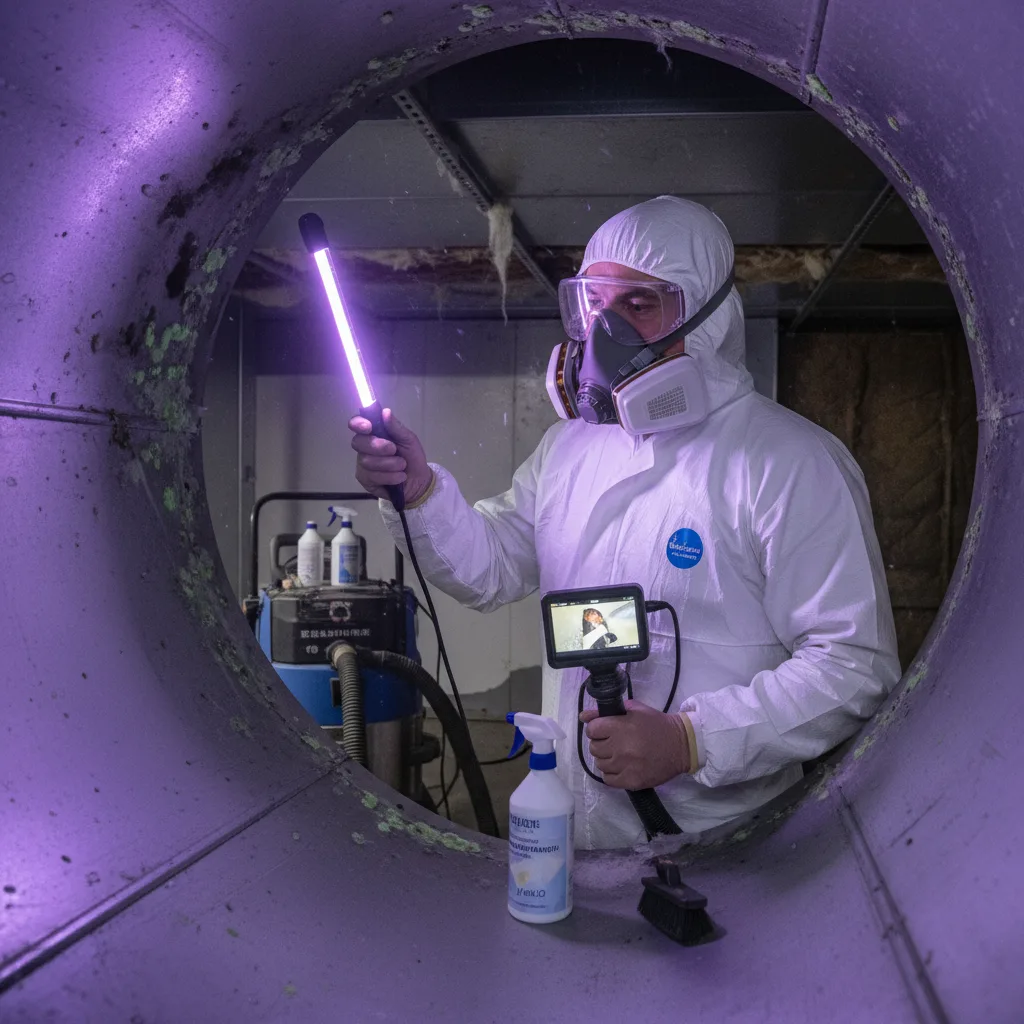
Mold in Air Ducts: Remediation Guide
How to identify mold in your HVAC system, what it costs to fix, and how to keep it from coming back.
⚠️ Health Warning: Mold spores circulating through your HVAC system get distributed throughout your entire home. Exposure can cause respiratory issues, allergic reactions, and in vulnerable individuals, serious illness. Don't ignore signs of mold in your ductwork.
How Mold Gets Into Air Ducts
Mold thrives in dark, moist environments — which describes ductwork perfectly when conditions are right. The most common causes of mold in HVAC ducts include:
- High indoor humidity (above 60%) allowing condensation to form in ducts
- Oversized air conditioning systems that cool too quickly without dehumidifying
- Leaky ducts that allow moist unconditioned air to enter
- Standing water in the drip pan or drain lines
- Poor insulation causing condensation on duct surfaces
Signs of Mold in Your HVAC System
- Musty, earthy smell that gets stronger when the HVAC runs
- Visible black, green, or white spots around vents or registers
- Unexplained allergy symptoms that worsen at home
- Family members experiencing headaches, fatigue, or respiratory issues indoors
- Mold visible on or around the air handler unit
What Mold Remediation Costs
The cost of mold remediation in air ducts varies significantly based on the extent of contamination:
- Minor mold (isolated area): $500–$1,500 — cleaning with antimicrobial treatment
- Moderate mold (multiple duct sections): $1,500–$4,000 — thorough cleaning + encapsulation
- Severe contamination: $4,000–$10,000+ — may require partial duct replacement
Note: If mold is caused by moisture issues (leaks, poor insulation), those root causes must be addressed or mold will return. This may add to your total cost.
The Remediation Process
- Initial inspection and air quality testing to identify mold species and extent
- Containment of affected areas to prevent spreading spores
- HEPA vacuuming and physical cleaning of all contaminated surfaces
- Application of antimicrobial/antifungal treatment to all duct surfaces
- Optional: encapsulation coating to prevent future mold growth
- Post-remediation testing to verify clearance
- Addressing root cause (humidity control, duct sealing, insulation)
Think You Have Mold? Get a Free Quote
We'll connect you with certified mold remediation specialists in your area.
Prevention: How to Keep Mold Out
- Keep indoor humidity between 30–50% using a dehumidifier if needed
- Replace air filters every 1–3 months
- Have your ducts inspected annually
- Ensure proper duct insulation to prevent condensation
- Fix any duct leaks promptly
- Clean drip pans and drain lines regularly
← Back to Air Duct Cleaning | HVAC Inspection →