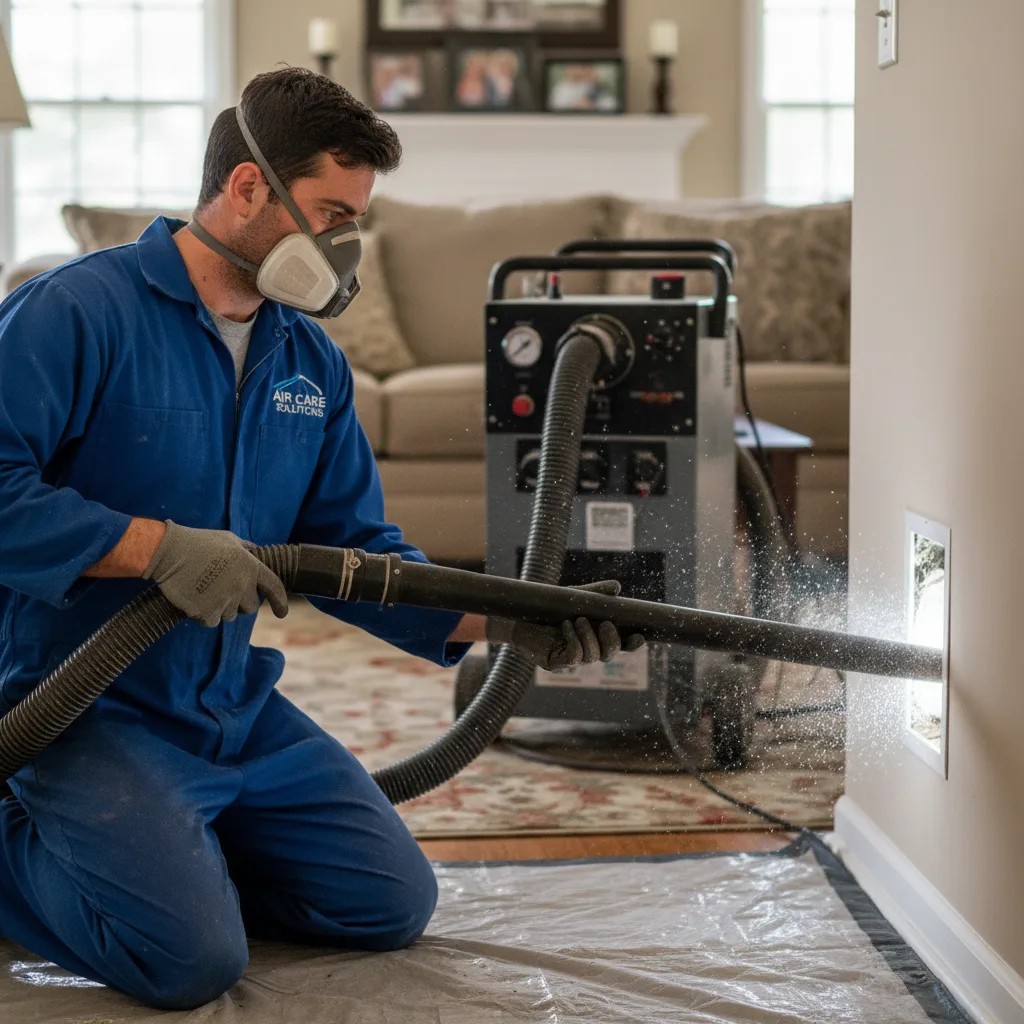
You've signed the papers, the keys are in your hand, and you're staring at an empty house full of possibilities. Somewhere between ordering a dumpster and arguing about paint colors, someone mentions air duct cleaning. Your realtor might have suggested it. Maybe you saw a Groupon deal. Or perhaps you just don't love the idea of breathing whatever the previous owners left behind.
The question is whether it's actually worth $300–$700 before you've even bought furniture. The answer depends entirely on the specific situation you're walking into. Let's break it down.
New Construction: Yes, You Probably Need It
This surprises most people. A brand-new house — never lived in, everything pristine — should have clean ducts, right? In reality, new construction is one of the strongest cases for duct cleaning before move-in.
What's Actually in New Construction Ducts
During construction, your HVAC system is typically installed months before the house is finished. During that time, the ductwork is wide open while trades are working around it. Here's what accumulates:
- Drywall dust: Fine gypsum particles from sanding and cutting get everywhere, including deep into ductwork
- Sawdust and wood shavings: From framing, trim, and cabinet installation
- Insulation fibers: Fiberglass and cellulose particles from nearby installation
- Paint overspray: Aerosolized paint particles settle inside exposed ducts
- Concrete and morite dust: From foundation work and masonry
- Debris: Screws, wire nuts, soda cans, lunch wrappers — construction crews aren't known for keeping duct interiors spotless
When you turn on the HVAC system for the first time, all of this gets blown into your living space. The EPA notes that new homes often have worse initial indoor air quality than established homes specifically because of construction contaminants.
⚠️ Builder warranties: Some builders include duct cleaning in their final punch list. Check your purchase agreement before paying for it separately. If it's not included, ask your builder to add it — many will, especially if you push back during the final walkthrough.
When to Schedule It
For new construction, schedule duct cleaning after all construction and final cleaning is complete, but before you move furniture in. The cleaning crew needs access to all vents, and some cleaning methods generate dust that settles on surfaces. An empty house is ideal.
Existing Homes: It Depends on What You Find
Buying an existing home is different. The ducts have been in use, and their condition depends on the previous owners' maintenance habits, lifestyle, and how long they lived there. Here's when cleaning is a smart move.
Definitely Clean If:
- Previous owners had pets: Pet dander, hair, and odors accumulate in ductwork and persist long after the animals are gone. If you have allergies, this is non-negotiable
- Previous owners smoked indoors: Cigarette smoke residue coats the inside of ductwork and continues to off-gas for years. Even if the house has been repainted and carpets replaced, the ducts still hold smoke residue
- There's visible mold: If you can see mold growth on vent registers or inside ducts, cleaning is essential — along with addressing the moisture source
- The home was vacant for months: Vacant homes with idle HVAC systems can develop dust accumulation, pest activity, and moisture issues in ductwork
- Recent renovation or remodel: If the sellers did a kitchen remodel, bathroom renovation, or any work involving drywall, the ducts likely have construction debris
- No record of previous cleaning: If the home is 10+ years old and there's no evidence ducts were ever cleaned, they're overdue
Probably Skip If:
- The previous owners have duct cleaning receipts from the last 3–5 years
- The home inspection shows clean registers and no visible debris or mold
- No pets, no smokers, no recent renovation
- The HVAC system is newer (under 5 years) with documented maintenance
What to Inspect Before You Decide
You don't need to commit to duct cleaning blindly. A few minutes of inspection can tell you a lot about what you're dealing with.
DIY Duct Inspection Checklist
- Remove a vent cover and look inside: Use your phone's flashlight. You're looking for visible dust buildup, debris, discoloration, or anything that shouldn't be there
- Check the return air grille: The large return vent is the best indicator of overall system cleanliness. Heavy dust accumulation here means the whole system is dirty
- Look at the HVAC filter: If the existing filter is black with debris, the ducts upstream of it are likely dirty too
- Smell the air: Run the HVAC system for 15 minutes. Musty or stale smells indicate mold or accumulated organic matter in the ducts
- Check for pest evidence: Look for droppings, nesting material, or insect activity around vent openings
- Inspect accessible duct joints: If you can access ductwork in the basement or attic, check for gaps, damage, or visible debris inside
Pro tip: Ask your home inspector to pay special attention to the HVAC system and ductwork during the inspection. Many inspectors will note duct condition if asked, but won't prioritize it unless prompted. Some will even take photos inside ducts with a scope camera.
Cost vs. Benefit Analysis
Let's be honest about the money. Duct cleaning for a typical home costs $300–$700 depending on your location and home size. Use our cost calculator to get an estimate for your specific situation.
When the Cost Is Worth It
| Situation | Estimated Cleaning Cost | Potential Benefit |
|---|---|---|
| New construction | $300–$500 | Removes construction debris, protects new HVAC system |
| Previous pet owner (allergies) | $400–$700 | Eliminates allergens, improves air quality immediately |
| Smoker's home | $400–$700 | Removes smoke residue that would otherwise linger for years |
| 10+ years, never cleaned | $300–$600 | Restores airflow, reduces HVAC strain, improves efficiency |
| Post-renovation | $300–$500 | Removes drywall dust and construction particulates |
When You're Better Off Waiting
If the ducts look clean, there's no pet or smoke history, and the HVAC system is well-maintained, you'll get more value from spending that $400 on a high-quality air filter system, professional HVAC tune-up, or even a new smart thermostat. Clean ducts don't need cleaning just because you're the new owner.
Timing: When to Schedule the Cleaning
If you decide duct cleaning makes sense, timing matters. The best window is:
- After closing, before move-in: This is the ideal scenario. Empty rooms mean easy access to all vents, and any dust generated during cleaning settles on bare floors that you can mop — not on your furniture and belongings
- Coordinate with other move-in work: If you're having the house professionally cleaned, painting, or refinishing floors, schedule duct cleaning before the final house cleaning but after any dusty renovation work
- Allow 1–2 days before moving in: Give any residual dust time to settle and do a final wipe-down of surfaces after the duct cleaning
⚠️ Don't wait until after move-in. Once furniture, clothing, and bedding are in place, duct cleaning becomes more disruptive. Technicians need access to every vent, and some cleaning methods generate airborne particles that settle on surfaces. It's significantly easier and more effective in an empty house.
New Homeowner HVAC Checklist
Whether or not you clean the ducts, here's what every new homeowner should do with their HVAC system:
- Replace the air filter immediately: Don't trust whatever the previous owner left in there. Start fresh with a MERV 8–13 filter
- Schedule a professional HVAC tune-up: A $100–$150 service call catches problems before they become expensive repairs
- Clean all vent registers: Remove, soak in warm soapy water, dry, and reinstall. This takes 30 minutes and costs nothing
- Check and clean the dryer vent: This is a fire safety issue, not just an air quality one
- Locate your HVAC shut-offs: Know where the breaker and gas valve are before you need them in an emergency
- Set up a filter replacement schedule: Every 60–90 days for standard filters, or per manufacturer recommendation
- Document the system: Note the model numbers, installation dates, and any warranty information for your records
How to Avoid Overpaying
Moving is expensive enough without getting ripped off on duct cleaning. Protect yourself:
- Get three quotes: Prices vary significantly between companies, even in the same market
- Beware of move-in "specials": Some companies target new homeowners with low-ball bait-and-switch offers
- Ask what's included: A real quote should cover all supply and return ducts, the main trunk line, and the HVAC unit cleaning
- Verify credentials: Look for NADCA certification and check reviews that specifically mention move-in cleanings
- Don't bundle blindly: Some movers and realtors have preferred vendors who aren't necessarily the best value. Do your own research
Moving Into a New Home? Get Duct Cleaning Quotes
Connect with vetted, insured duct cleaning professionals in your area. Pre-move-in scheduling available.
🏢 Are You a Duct Cleaning Contractor?
New homeowners are your best leads — they're actively searching and ready to buy. Build automated follow-up sequences and review funnels with GoHighLevel to capture this high-intent audience.
GoHighLevel for HVAC Businesses → Professional Quoting Software →