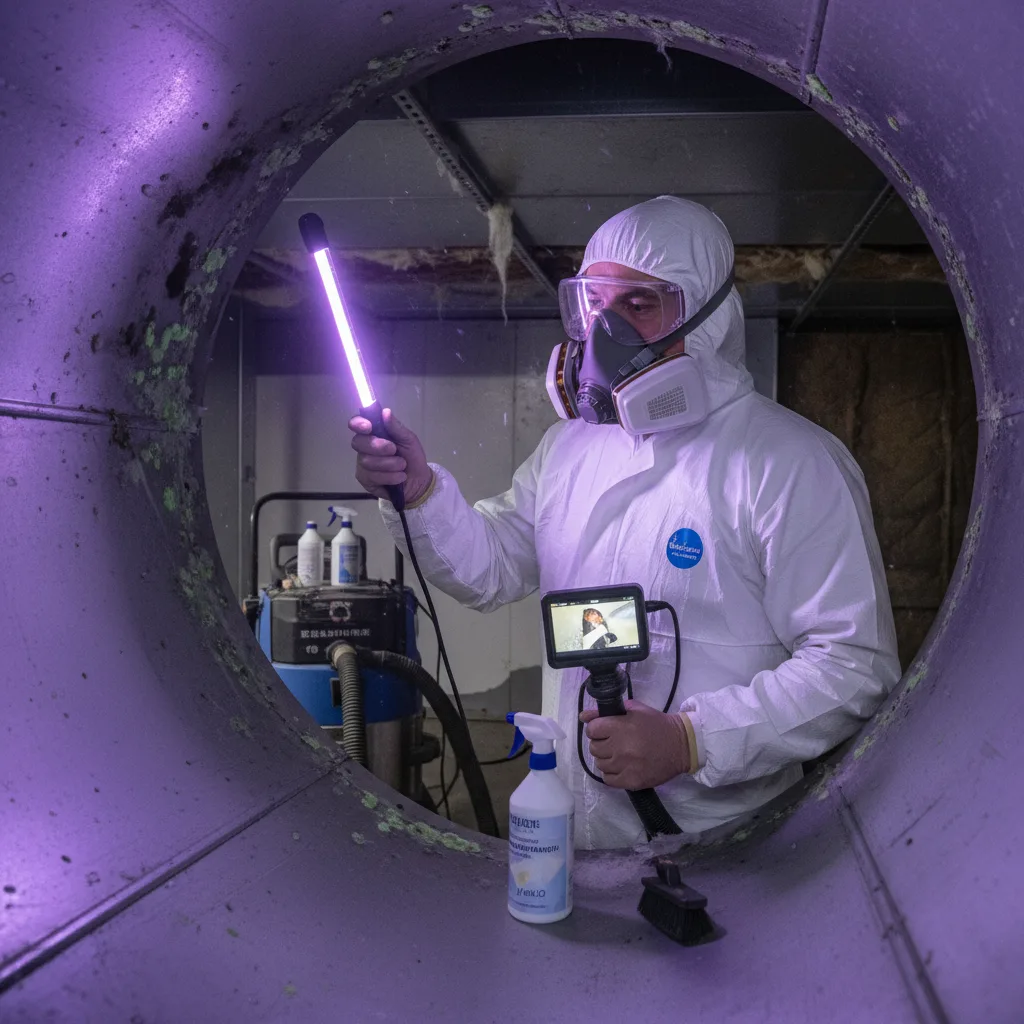
Air ducts exposed to water damage need professional cleaning within 24-48 hours to prevent mold growth. The process includes moisture extraction, antimicrobial sanitization, and duct drying. Costs range from $400-$2,000 depending on the extent of water intrusion and whether duct insulation requires replacement.
This guide covers what makes water-damaged duct cleaning different from routine cleaning, how fast mold develops, what the remediation process involves, what it costs, and the critical question of when to clean versus when to replace.
Why Water Damage Is Different
Standard air duct cleaning deals with dust, debris, pet dander, and biological buildup accumulated over years. Water damage is an entirely different category of problem.
When water enters your HVAC system — whether directly (flooding reaches the air handler) or indirectly (high humidity from a nearby water event saturates flexible ductwork) — several things happen simultaneously:
- Insulated flexible ducts absorb moisture: Flex duct is wrapped in fiberglass insulation. Once wet, fiberglass insulation is nearly impossible to fully dry. It becomes a permanent mold substrate.
- The air handler becomes a petri dish: The evaporator coil, drain pan, and blower housing are dark, damp environments where mold colonizes rapidly after water intrusion.
- Sheet metal ducts corrode: Rigid metal ductwork resists mold growth better than flex duct, but extended moisture exposure causes rust and joint failure.
- Running the HVAC system spreads contamination: If you run your HVAC after a water event without having the system inspected, you're potentially distributing mold spores and bacteria through every room in the house.
⚠️ Stop running your HVAC immediately after any significant water intrusion event until the system has been inspected by a certified professional. Running a contaminated system spreads mold throughout your home.
Water damage duct cleaning also requires different certifications. Look for contractors certified in both NADCA (National Air Duct Cleaners Association) standards and IICRC (Institute of Inspection, Cleaning and Restoration Certification) S520 mold remediation protocols — not just general duct cleaners.
Timeline: How Fast Mold Grows in Ducts
Mold doesn't need weeks to establish itself. Under warm, humid conditions — exactly what exists inside a duct system after water exposure — mold colonies can begin forming within 24–48 hours.
| Time After Water Exposure | What's Happening |
|---|---|
| 0–24 hours | Materials are wet; mold spores present but not yet colonized. Primary goal: stop the water source and begin drying. |
| 24–48 hours | Mold germination begins in warm, humid conditions. Surface mold may become visible on porous materials. |
| 48–72 hours | Active mold growth. Flexible ductwork insulation may already be compromised. Odor may develop. |
| 3–7 days | Established mold colonies. Mycotoxin production possible. Flex duct likely unsalvageable if saturated. |
| 1–4 weeks | Structural mold spread. Ductwork, air handler components, and surrounding building materials all affected. |
| 1+ months | Systemic contamination. Replacement of ductwork and HVAC components likely necessary. |
The takeaway: speed is everything. The difference between a cleaning job and a full duct replacement job often comes down to how quickly you acted after the water event.
Types of Water — Contamination Level Matters
Not all water damage is equal. Restoration professionals classify water damage by contamination level:
- Category 1 (Clean water): Supply line breaks, rain water, or overflowing sinks. Lower contamination risk, but mold still grows if moisture persists.
- Category 2 (Gray water): Washing machine overflow, dishwasher leaks, aquarium water. Contains biological contaminants. Ductwork exposure requires professional remediation.
- Category 3 (Black water): Sewage backflow, floodwater from rivers or storm drains, any water that has touched the ground outside. Contains pathogens and fecal matter. Any ductwork that contacted Category 3 water must be replaced — it cannot be cleaned to a safe standard.
What the Cleaning Process Involves
Post-water-damage duct remediation is a multi-step process that goes well beyond standard duct cleaning:
Step 1: Moisture Assessment
Before any cleaning begins, technicians use moisture meters and thermal imaging cameras to determine which duct components are wet, damp, or already harboring mold. This assessment guides the scope of work and documents the damage for insurance purposes.
Step 2: Source Remediation
Cleaning ducts before the source of moisture is fixed is pointless. Confirm that the original water intrusion source (leaking roof, burst pipe, foundation seepage) has been repaired and the area is drying.
Step 3: Containment
Technicians set up containment barriers around the work area using plastic sheeting to prevent mold spores dislodged during cleaning from spreading to other areas of the home. Negative air pressure machines (air scrubbers with HEPA filtration) are run throughout the process.
Step 4: Component Assessment — Clean vs. Replace Decision
Each component is assessed individually. Rigid metal ductwork with surface mold and no physical damage can often be cleaned. Flexible ductwork with saturated insulation, components that contacted Category 3 water, and anything with structural compromise must be replaced.
Step 5: Mechanical Cleaning
Salvageable rigid ductwork is cleaned with HEPA-vacuuming and rotary brush systems, followed by antimicrobial treatment applied to duct interiors. The air handler, blower, coil, and drain pan are cleaned and treated separately.
Step 6: Antimicrobial Treatment
EPA-registered antimicrobial agents are applied to duct interiors after mechanical cleaning. This is a legitimate use of antimicrobial treatment (unlike the scam version where companies charge for "mold treatment" on dry ducts that don't need it).
Step 7: Post-Remediation Verification
A third-party industrial hygienist or certified indoor air quality professional should conduct post-remediation testing — air sampling and surface swabs — to confirm the mold has been successfully remediated before the HVAC system is put back in service.
Insurance documentation: Document everything with photos and video before, during, and after remediation. Most homeowner's insurance policies cover water damage remediation including duct cleaning if the damage resulted from a covered peril (sudden and accidental water intrusion, not flooding — flood damage requires separate flood insurance).
Cost of Post-Water-Damage Duct Cleaning
Water damage duct remediation costs significantly more than routine cleaning:
| Service | Typical Cost Range |
|---|---|
| Standard duct cleaning (comparison) | $300 – $700 |
| Post-water-damage duct cleaning (mild) | $800 – $1,500 |
| Post-water-damage cleaning with mold remediation | $1,500 – $4,000 |
| Air handler and coil cleaning/treatment | $300 – $600 |
| Antimicrobial treatment | $200 – $500 |
| Post-remediation air quality testing | $200 – $500 |
| Partial duct replacement (flex duct) | $1,000 – $3,000 |
| Full duct system replacement | $3,000 – $10,000+ |
The wide range reflects home size, extent of damage, and whether replacement is needed. Always get at least two quotes from certified companies, and ask whether the quote includes post-remediation testing — it should.
Insurance Claims
If your water damage is covered by homeowner's insurance, document everything meticulously. Take timestamped photos and video immediately after discovering the damage. Keep all remediation receipts and reports. Insurance adjusters will want to see a written scope of work from a certified remediator before approving claims.
When to Replace vs. Clean
This is the most important decision in post-water-damage HVAC recovery:
Clean If:
- Water damage was Category 1 (clean water) and addressed within 24–48 hours
- Rigid sheet metal ductwork shows surface mold only with no physical damage
- Air handler components are salvageable (no rust damage, insulation intact)
- Moisture readings are near normal after drying period
- No visible mold growth penetrating duct walls
Replace If:
- Flexible ductwork insulation is saturated — it cannot be dried or cleaned to a safe standard
- Any component contacted Category 3 (black) water
- More than 72 hours elapsed before remediation began in warm conditions
- Mold growth has penetrated into duct wall materials (not just surface mold)
- Ductwork shows physical damage — rust, collapsed sections, disconnected joints
- The cost of cleaning exceeds 50–60% of replacement cost
⚠️ Don't let a contractor talk you into cleaning when replacement is the right answer. Some companies prefer the revenue from cleaning over replacement. If you're unsure, get a second opinion from a company that does both services — or hire an independent industrial hygienist to assess and recommend.
If your home has anyone with respiratory conditions, mold sensitivities, or compromised immune systems, the replacement threshold should be lower. The cost of replacement is significant; the cost of ongoing mold exposure is worse.
Get Water Damage Duct Cleaning Quotes
Connect with NADCA-certified and IICRC-certified professionals in your area. Free quotes, no obligation.
🏢 Are You an HVAC or Restoration Contractor?
Water damage restoration is time-critical and high-value. Use GoHighLevel to automate follow-ups, job updates, and insurance documentation workflows — keeping customers informed without adding admin overhead.
GoHighLevel for Restoration Businesses → Professional Quoting Software →