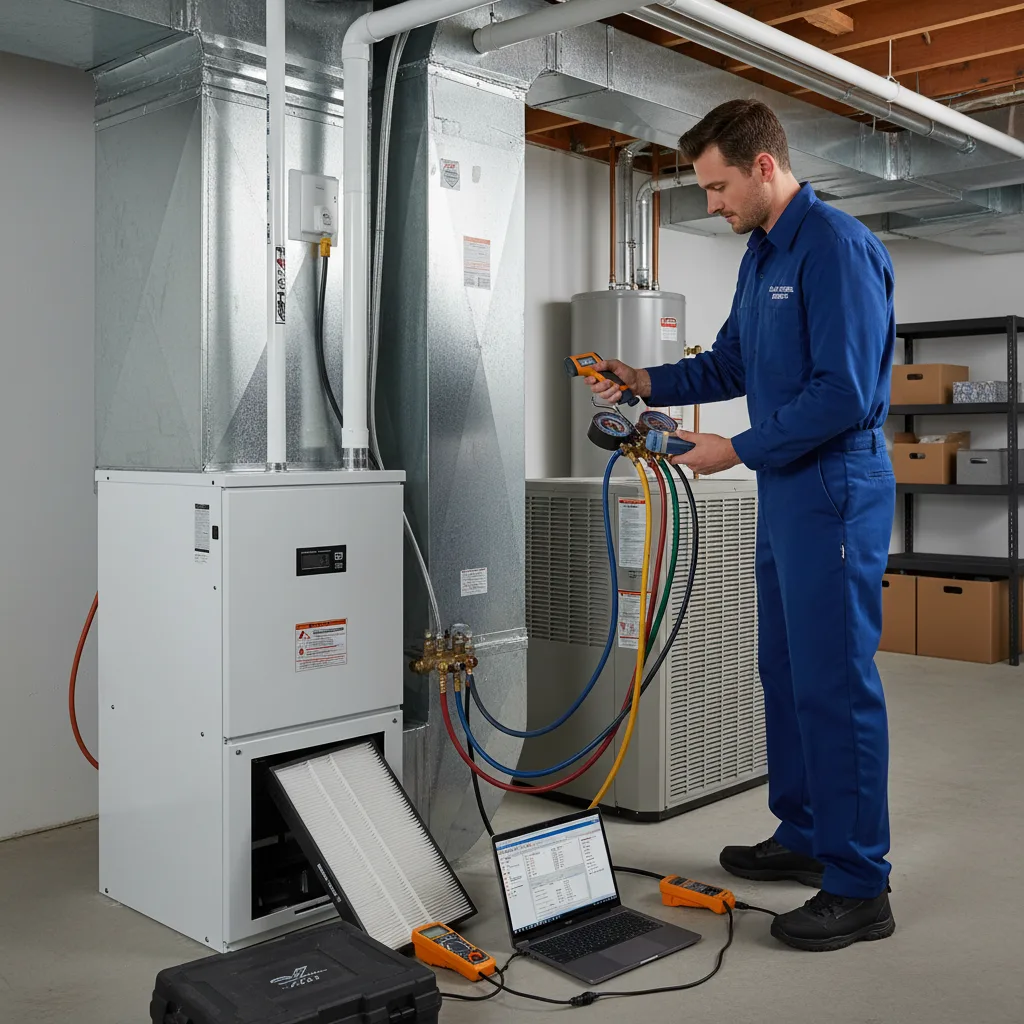
Flexible ducts are harder to clean than metal ducts and more prone to damage during cleaning. Flex ducts require soft-bristle brushes and lower air pressure, while metal ducts can handle aggressive rotary brushes. If your flex ducts are over 15 years old or torn, replacement is usually more cost-effective than cleaning.
Here is what you need to know before you hire anyone.
What Is Flex Duct?
Flex duct is exactly what it sounds like: a flexible tube that can bend and route through tight spaces without the precision cutting that rigid metal requires. It has three layers: a plastic inner liner, a wire helix coil that gives it its shape, and an outer wrap of insulation covered by a foil or polyethylene jacket.
Flex duct became popular in the 1980s and is now extremely common in residential HVAC systems, especially in the Sun Belt states where attic duct runs are the norm. It is cheaper to install than metal, easier to route around obstacles, and faster for contractors to work with. Most homes built in the last 40 years have at least some flex duct.
What Is Metal (Rigid) Duct?
Metal duct, also called sheet metal or rigid duct, is fabricated from galvanized steel or aluminum in rectangular or round sections. Each section is cut, formed, and connected with mechanical fasteners and mastic sealant or metal tape. Metal duct holds its shape permanently and has a smooth interior surface.
Metal duct is the older standard and is still used for main trunk lines in most systems. Commercial buildings use it almost exclusively. In residential homes, you'll typically find the main supply and return plenums in metal, with flex duct branches running out to individual room vents.
How to Tell What You Have
Access your attic, basement, or crawl space and look at the duct runs. Flex duct looks like a silvery, crinkled sausage that bends and droops between joists. It has a textured, wrinkled exterior. Metal duct looks like rectangular or round boxes with flat, solid walls and visible seams where sections connect.
Most homes have both: large metal trunk lines running down the center, with flex duct branches splitting off to reach individual rooms. If you can only see the registers in finished rooms, ask your HVAC contractor which type is in the walls.
Why Cleaning Is Different for Each Type
Metal Duct Cleaning
Metal ducts are the easier of the two to clean. The smooth interior walls do not trap debris as readily, and the rigid structure can handle more aggressive cleaning tools without damage. Technicians typically use rotary brush systems attached to high-powered vacuums, pushing the brush through each section while the vacuum pulls debris out.
Metal duct cleaning is well-suited for the standard NADCA method: negative air pressure in the trunk line while compressed air tools or brushes dislodge debris from each branch. The process is efficient and thorough when done correctly.
Flex Duct Cleaning
Flex duct is harder. The ribbed interior liner traps dust and debris in every fold. The walls are soft enough to tear or collapse under excessive force. Sharp or stiff brush attachments can puncture the inner liner, which is a costly mistake that requires section replacement.
Important: A contractor who uses the same aggressive rotary brushes on flex duct that they use on metal duct is doing it wrong. Proper flex duct cleaning uses softer brush attachments, air whip tools, or skip-lining techniques that clean without damaging the liner. If a company does not mention duct type during their quote, ask directly how they handle flex duct.
Flex duct runs with sharp bends are especially problematic. The tool has to navigate the bend without tearing the liner, which limits how deep into the run a technician can effectively clean. Longer runs with multiple bends may require working from both ends.
Common Problems Specific to Each Type
Problems with Flex Duct
- Sagging and kinking: Flex duct should be fully extended and properly supported. When it sags or kinks, airflow drops significantly. A kinked run can reduce airflow by 50 percent or more.
- Tears and punctures: The inner liner can be punctured during cleaning or by pests. Conditioned air then escapes into unconditioned attic space, wasting energy.
- Disconnected sections: Connections between flex duct and metal fittings can loosen over time. You end up heating or cooling the attic instead of the room.
- Mold growth inside insulation: Moisture that gets into the insulation wrap creates mold that cleaning cannot address. Replacement is the only fix.
Problems with Metal Duct
- Rust and corrosion: Metal ducts in humid climates or near water sources can rust, especially at seams. This creates air leaks and can introduce rust particles into airflow.
- Poor sealing at joints: If original installation used only tape instead of mastic, seams may open over decades. Energy loss from leaky metal ductwork can be 20 to 30 percent of conditioned air.
- Pest entry points: Gaps in metal duct seams are entry points for rodents, insects, and birds. Nests inside metal ducts are a real problem in attic systems.
Cost Comparison
| Duct Type | Typical Cleaning Cost | Cleaning Difficulty | Damage Risk During Cleaning |
|---|---|---|---|
| Sheet metal (rigid) | $280 to $450 | Lower | Low |
| Flex duct | $320 to $550 | Higher | Moderate if done poorly |
| Mixed system (typical) | $300 to $500 | Moderate | Low with proper technique |
Use our cost calculator to get a more precise estimate based on your home size and location.
When to Replace Instead of Clean
Cleaning makes sense when the duct is structurally sound and just dirty. Consider replacement when:
- Flex duct is more than 15 to 20 years old and showing wear
- Multiple sections are torn, kinked, or collapsed
- Metal duct has significant rust at multiple points
- There is active mold inside the duct material itself (not just on surfaces)
- Pest infestation has left nesting material throughout the system
- Seals and connections are failing throughout, causing major air leaks
Replacing flex duct in an average home costs $500 to $1,500 for materials and labor. Metal duct replacement is more expensive, typically $1,500 to $3,000 or more, but lasts much longer. If a contractor recommends replacement, ask them to show you the specific damaged sections and photograph them before deciding.
Questions to ask any contractor: Ask specifically whether your home has flex or metal duct, what cleaning method they use for each, and whether they carry camera inspection equipment to assess condition before and after. A contractor who cannot answer these questions confidently is not the right choice.
Get Quotes from Duct Cleaning Contractors
Find local pros who know how to handle flex and metal ductwork. Free quotes, no obligation.
Are You an HVAC Contractor?
Running a duct cleaning or HVAC service business? GoHighLevel helps you automate follow-ups, manage reviews, and close more jobs from your website leads.
GoHighLevel for HVAC Businesses →